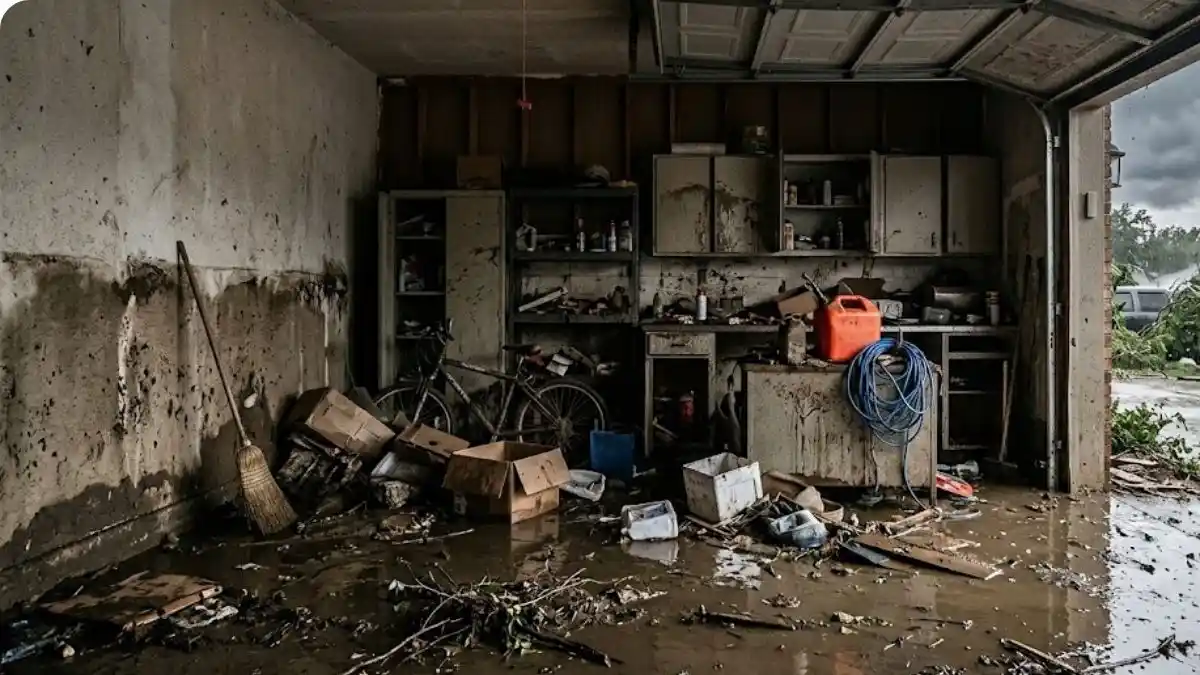
Fairfax County's summer convective storms regularly produce rainfall rates that overwhelm stormwater infrastructure built decades ago. Late-afternoon thunderstorms can drop two to three inches of rain in under an hour — faster than the storm drain network in older suburban neighborhoods can handle. When overland flooding enters a home through below-grade doors, window wells, or foundation gaps, the water arriving carries whatever was in the drainage system.
Call (703) 397-8315 for storm and flood cleanup in Fairfax, VA — 24/7.
Storm Flooding and Insurance: What Standard HO Policies Cover
The coverage gap that surprises most Fairfax homeowners: standard homeowners insurance covers internal water damage from sudden appliance failures, burst pipes, and similar events, but explicitly excludes flooding from external water sources. Overland flooding from a rainstorm, storm drain overflow, and flash flood events require a separate National Flood Insurance Program (NFIP) policy. This gap exists regardless of whether the flooding was caused by a design flaw in the storm drain system, a construction defect, or a once-in-a-generation storm event.
Fairfax County has a Flood Mitigation Assistance Program (FMAP) that reimburses eligible homeowners for flood mitigation projects such as sump pump upgrades and drainage improvements. This is a separate program from insurance and does not cover cleanup after a flood event, but it is worth noting for prevention planning after a cleanup is complete.
| Storm Event Type | Water Category | Insurance Path | Primary Cleanup Step |
|---|---|---|---|
| Flash flood / overland flooding | Category 3 (contaminated) | NFIP policy required | Muck-out, removal of all porous materials |
| Storm drain backup | Category 3 | May fall under sewer backup rider | Biohazard protocols; full demo of wet porous materials |
| Roof / window intrusion from storm | Category 1 (clean) | Standard HO wind/water | Extraction and structural drying |
| Water main break | Category 1 at source | HO sudden intrusion or municipal liability | Volume extraction, document source |
| Storm-driven sump failure | Category 1 to 2 | Sump pump rider | See flooded basement cleanup |
Flash Flood and Overland Flooding Cleanup
Floodwater entering a home from the outside is classified as Category 3 water — it is presumed contaminated with bacteria, sediment, and in some events, sewage overflow from overloaded municipal systems. All porous materials that floodwater has contacted — drywall, insulation, carpet, pad, and wood that has been submerged — must be removed rather than dried in place. The health risk from contaminated water retained in porous materials is not eliminated by drying; the pathogens remain in the material.
Muck-out is the first step: removing sediment, debris, and contaminated material that floodwater deposited. This must be complete before drying equipment can be effective. We treat floodwater cleanup as a biohazard scope, wearing appropriate PPE and disposing of removed materials per applicable protocols.
Roof Damage and Wind-Driven Rain Intrusion
Fairfax County's summer storms regularly produce high winds that displace shingles, damage flashing around HVAC units and chimneys, and force water through roof penetrations. The water intrusion that follows is typically clean Category 1 water from direct rainfall, which responds to standard extraction and structural drying rather than the biohazard protocols required for floodwater. However, roof damage creates ongoing intrusion risk if not repaired promptly, and water in attic insulation creates mold conditions quickly in Fairfax County's humid summer climate.
We extract wind-driven rain intrusion, assess ceiling and attic conditions, and document damage for your HO wind/water claim. Roof repair and reconstruction are coordinated separately through your carrier's preferred contractor network or your own contractor.
Flood Debris Removal and Muck-Out
After floodwater recedes, a layer of silt, mud, and debris remains on every surface the water touched. This material is not simply dirt — it contains bacteria, mold spores, and in events involving storm drain overflow, human waste components. Attempting to dry a flood-affected space without removing this material first is ineffective: drying equipment cannot process contaminated solid material, and the debris layer keeps structural materials wet longer.
Muck-out involves removing all contaminated solid material from floors and horizontal surfaces, bagging it as contaminated waste, and cleaning hard surfaces with disinfectant before any drying equipment is positioned. We do not skip this step.
Water Main Break Flooding
Municipal water main breaks can introduce large volumes of clean water into homes and commercial properties quickly through foundation penetrations, utility entries, and below-grade openings. The water is clean at the point of entry, which changes the cleanup approach compared to floodwater: drying in place of appropriate materials may be feasible, and the biohazard protocols for contaminated floodwater do not apply. We document the source and entry point clearly because the insurance path — your HO policy, the municipal utility's liability, or both — depends on how the water entered and why.