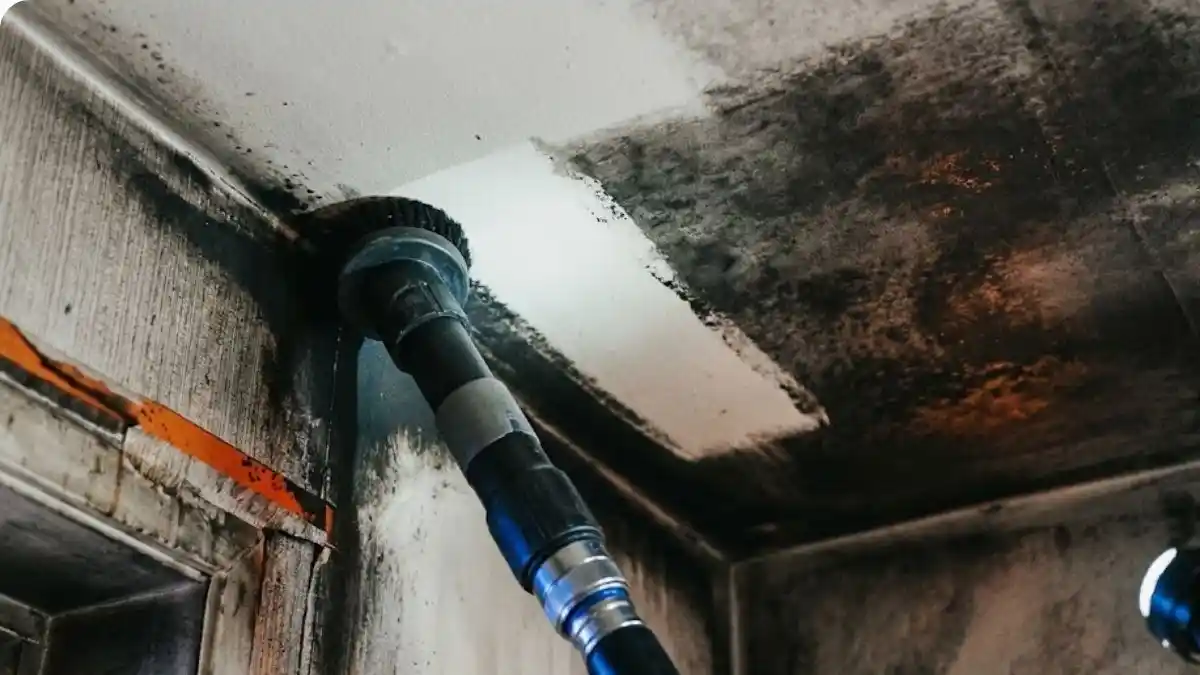
Soot is acidic, and it does not wait. Within hours of a fire, soot deposits begin etching into metals, discoloring porous stone and grout, yellowing painted surfaces, and permanently staining fabrics. The cleanup window for salvaging materials is measured in days, not weeks. Surface cleaning that appears to remove visible soot but leaves embedded residue behind will fail within weeks as the underlying chemistry continues to react with the material.
Call (703) 397-8315 for smoke and soot cleanup in Fairfax, VA — 24/7.
Smoke Residue Chemistry and Why It Matters
Not all soot is the same material. The type of residue a fire produces depends on what burned, how fast the combustion occurred, and how much oxygen was available. Getting the chemistry wrong at the cleanup stage means permanent damage: applying moisture to dry soot smears carbon into surfaces. Using the wrong chemical on protein smoke from a kitchen fire can lock the residue into porous materials. Each residue type has a specific cleaning protocol, and a trained technician identifies the type before any cleaning agent touches a surface.
| Soot Type | Origin | Appearance | Cleaning Method |
|---|---|---|---|
| Dry soot | Fast-burning, high-oxygen fires (paper, wood) | Fine, powdery, gray or black | Dry cleaning sponges, HEPA vacuum — no moisture |
| Oily soot | Smoldering fires, synthetics, oil furnace puffback | Sticky, smeared, dark brown-black | Chemical degreasers, solvent-based agents |
| Protein smoke residue | Kitchen fires, burning meat or grease | Near-invisible thin film, strong odor | Enzymatic cleaners, heavy degreasing |
| Soot tags | Smoldering low-oxygen fires | Web-like dark strands on ceilings / corners | HEPA capture; never dry-wipe — redistributes particles |
HVAC Systems as Soot Distribution Networks
In any home with forced-air heating or cooling, the HVAC system becomes a distribution network for smoke and soot during a fire. Return air vents draw smoke-laden air into the ductwork; the blower distributes contaminated air throughout every supply register. By the time a fire is extinguished, soot deposits may exist inside every duct run in the home, on the air handler coil, and on the filter and cabinet surfaces.
Running the HVAC system after a fire without cleaning the ductwork redistributes soot from the ducts back into every room each time the system cycles. We inspect and clean the HVAC system as a standard component of smoke and soot cleanup, not a separate optional service.
Surface-by-Surface Approach to Soot Removal
Soot behavior varies by surface material. Painted drywall, glossy surfaces, metal, fabric, carpet, hardwood, concrete — each requires a different technique and tool. Unfinished wood absorbs soot into the grain, often requiring sealing rather than cleaning alone. Fabric upholstery and carpet retain odor-causing particles in fibers that surface cleaning cannot reach. Electronics with vent openings accumulate fine particulate on internal components that causes corrosion over months.
Our crews work room by room, surface by surface, with a documented sequence: HEPA vacuuming loose particulate first, then chemical treatment matched to the surface and residue type, then deodorization of the residue layer. No surface is assumed to be unaffected because it is distant from the fire origin.
Soot Damage to Metals and Electronics
Soot is electrically conductive and chemically corrosive to metals. On copper, brass, and steel surfaces, soot deposits begin etching within 24 hours. On electronics, fine particulate settles on circuit boards, contacts, and heat sinks, where it absorbs moisture and causes corrosion. Appliances, audio equipment, televisions, and computers in smoke-affected areas require professional evaluation even if they appear externally clean.
We inventory smoke-affected electronics and coordinate their evaluation with our contents restoration process. Some items are recoverable through professional cleaning at our facility; others must be documented as total losses for insurance purposes. See our contents cleaning page for detail on the pack-out and evaluation process.
Furnace Puffback Soot — A Specific Fairfax Pattern
Oil-fired furnaces in older Fairfax County homes can produce a puffback — a misfire event that forces oily soot throughout the HVAC system and into every room. Puffback soot is the oily type: heavy, greasy, and present on every surface that the ductwork serves. It is not a fire damage event in the traditional sense but requires the same professional soot cleanup process.
Because puffback soot is oil-based, it does not respond to general household cleaners. We address puffback soot cleanup as a dedicated service — see furnace puffback cleanup for the full scope including duct cleaning and post-event HVAC inspection.
How Smoke Odor Relates to Soot Cleanup
Soot cleanup and smoke odor removal are related but distinct processes. Removing visible soot deposits eliminates the source material for ongoing odor generation, but odor compounds are also embedded in porous materials — drywall paper, wood framing, carpet pad, upholstered furniture — that soot cleaning alone does not reach. After soot removal is complete, odor treatment is required to neutralize embedded compounds. See smoke odor removal for the fogging and treatment process that follows soot cleanup.