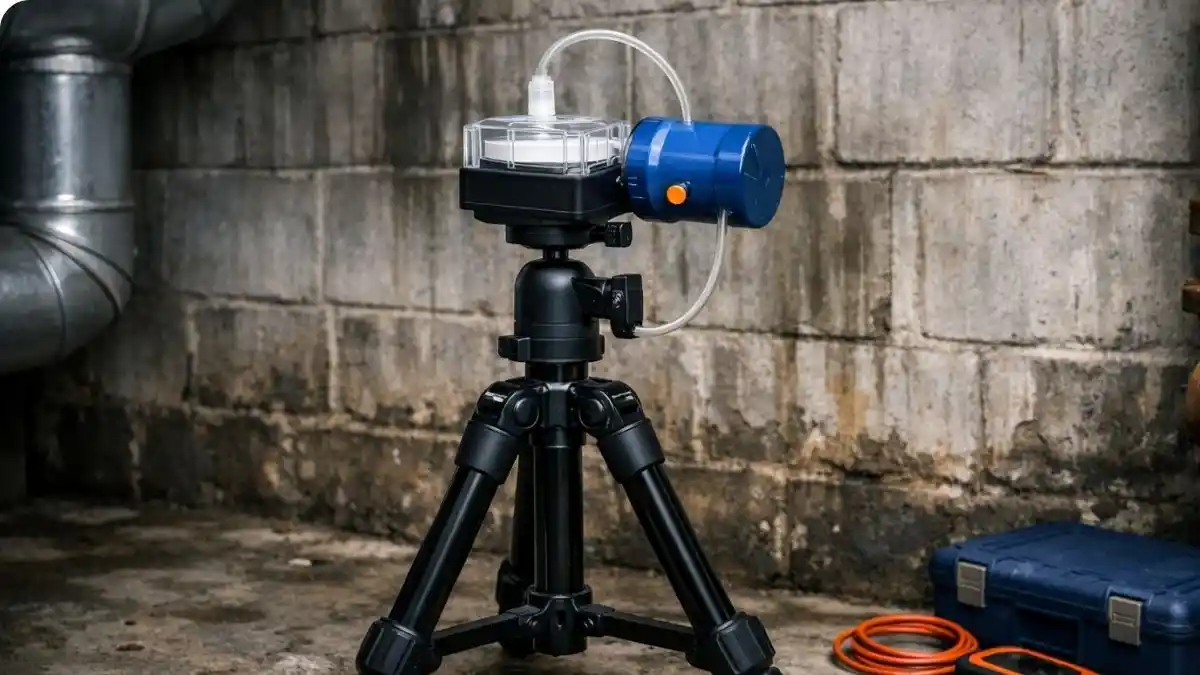
Visible mold is easy to identify. The situations that call for professional mold inspection are the ones where something is wrong — a persistent musty odor, occupant health concerns, prior water damage that was dried but perhaps not dried completely — but the source is not obvious. Mold inspection is the diagnostic process that locates the problem and characterizes it; mold testing through laboratory analysis confirms presence, identifies species, and provides the documented baseline for remediation and clearance.
Call (703) 397-8315 for mold inspection and testing in Fairfax, VA.
When Mold Inspection Is Indicated
The situations that call for professional mold inspection fall into several categories. A musty or earthy odor that persists after a water event or in a damp area of the home, but no visible mold is present. Occupant health concerns — respiratory symptoms, allergic reactions, or general malaise — that appear related to time spent in specific areas of the building. Prior water damage that was addressed but where a full drying verification was not performed. Real estate transactions where prior water damage is disclosed and the buyer wants independent confirmation that mold is not present. And post-remediation verification that a completed remediation scope was successful.
| Test Type | What It Measures | When to Use | Lab Turnaround |
|---|---|---|---|
| Air sampling (spore trap) | Airborne spore count by species; indoor vs outdoor comparison | Suspected mold without visible source; post-remediation clearance | 3–5 business days standard |
| Surface swab sampling | Mold species at a specific surface location | Species identification of visible growth; HVAC component assessment | 3–5 business days standard |
| Tape lift sampling | Visual identification of spores and structures from a surface | Rapid species assessment; archive of surface condition | 3–5 business days standard |
| ERMI / HERTSMI-2 | DNA-based quantification of 36 mold species from dust sample | Comprehensive building assessment; health-based interpretation | 5–10 business days |
| Post-remediation clearance | Air sampling confirming spore counts at background levels after remediation | After any significant mold remediation scope | 3–5 business days standard |
The Inspection Process
A mold inspection begins with a visual assessment of the entire property with particular attention to areas of known or suspected moisture exposure: basements, crawlspaces, bathrooms, kitchens, laundry areas, attics, and areas below roof penetrations. Moisture meters are used to assess structural materials at suspect locations — elevated moisture readings in a wall cavity without visible surface mold indicate conditions where mold growth inside the cavity is likely.
The visual inspection determines where to place air and surface samples for the most diagnostic value. Sampling locations are chosen based on where the evidence points, not distributed uniformly across the property. The number of samples required depends on the size of the property and the number of distinct areas of concern.
Laboratory Analysis and Report Interpretation
Air samples from a spore trap are analyzed at an accredited laboratory that identifies and quantifies spore types present in the collected air volume. The indoor samples are compared to a simultaneously collected outdoor baseline sample — outdoor air always contains some mold spores; the question is whether indoor concentrations of any species are elevated relative to outdoor background, which indicates an amplification source inside the building.
We provide the full laboratory report along with an interpretation that explains what the findings mean in practical terms: whether concentrations indicate a problem requiring remediation, which areas are affected, and what types of remediation are indicated based on the species and levels found. We do not interpret laboratory reports to minimize findings; if the results indicate a mold problem, we say so clearly.
Post-Remediation Clearance Testing
Clearance testing after mold remediation is air sampling performed by an independent party — not the remediation contractor — that confirms spore counts have returned to normal background levels after the remediation is complete. It answers the question: did the remediation work? Clearance testing is recommended after any significant remediation scope, and it is often required by insurance carriers, mortgage lenders, and buyers in real estate transactions involving properties with prior mold remediation.
We coordinate with independent testing professionals for clearance testing after our mold remediation work. The independence of the clearance tester from the remediation contractor is an important quality assurance component — the entity that performed the remediation should not be the same entity confirming it was successful.
Mold Testing for Real Estate Transactions in Fairfax County
Virginia real estate disclosure law requires sellers to disclose known material defects, which includes known mold conditions. Buyers in Northern Virginia frequently request mold inspection as part of due diligence, particularly in older homes or homes with disclosed prior water damage. A pre-listing mold inspection allows a seller to identify and address any issues before listing; a buyer's mold inspection provides independent baseline documentation. We provide testing documentation in formats suitable for real estate transaction disclosure and disclosure addendum use.