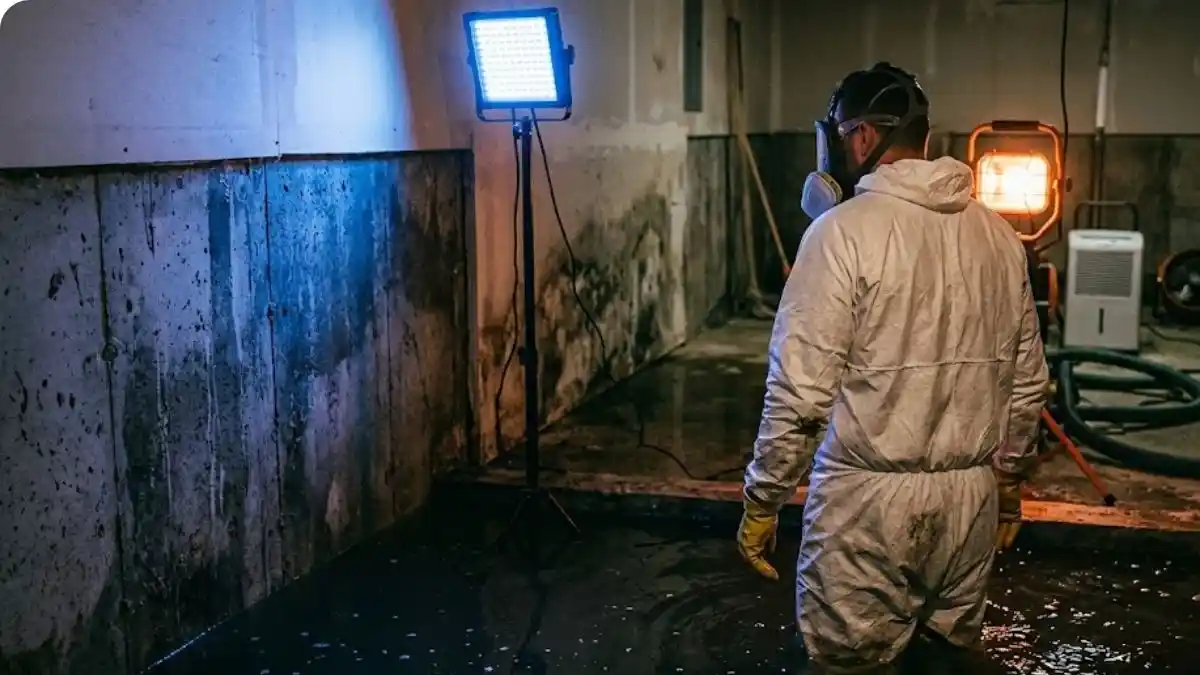
Sewage backup is the water damage event with the shortest tolerable response window. Category 3 black water containing pathogens begins saturating porous materials immediately, and the contamination it introduces is not eliminated by drying — it requires removal of every porous material that was contacted. The longer sewage remains in contact with drywall, insulation, carpet, and wood framing, the greater the health risk and the more material must come out.
Call (703) 397-8315 for sewage backup cleanup in Fairfax, VA — 24/7. Do not enter the affected area without PPE.
Do Not Enter Without Personal Protective Equipment
Sewage contains E. coli, hepatitis A, salmonella, and other pathogens that cause serious illness through contact with skin, mucous membranes, and any open wounds. Before entering a sewage-affected area, wear waterproof boots, nitrile gloves, safety glasses or goggles, and a respirator rated for biological aerosols. Do not eat, drink, or touch your face while in the contaminated area. Wash hands and exposed skin thoroughly after any contact. Children and immunocompromised individuals should not enter the area under any circumstances.
Category 3 Water Protocols: What Changes vs Standard Water Damage
Standard water damage cleanup extracts water and dries structural materials in place where possible. Sewage backup cleanup does not. Every porous material that Category 3 water has contacted must be removed and disposed of as contaminated waste — drywall, insulation, carpet, pad, and any wood that has been submerged. Drying these materials in place does not eliminate the pathogens; it simply desiccates material that still contains biological hazard.
Hard, non-porous surfaces — concrete, ceramic tile, certain painted surfaces — can be cleaned and disinfected in place if not structurally compromised. Wood framing that has had surface contact only can be disinfected. Wood that has been submerged in sewage for extended periods requires assessment for replacement.
| Material Type | After Sewage Contact | Action Required |
|---|---|---|
| Drywall and gypsum board | Remove — cannot be dried safely | Demo to above sewage contact line; bag as biohazard |
| Carpet and pad | Remove — cannot be decontaminated | Roll, bag, and dispose; no exceptions |
| Fiberglass insulation | Remove — absorbs and retains pathogens | Remove from wall cavity; bag as biohazard |
| Concrete floor | Cleanable with appropriate disinfectants | Scrub, disinfect, allow to dry; test if required |
| Ceramic / porcelain tile (intact) | Cleanable | Disinfect; assess grout lines separately |
| Wood framing | Clean and treat if surface contact only | Disinfect; assess for structural integrity if submerged |
| HVAC ductwork | Clean and disinfect if contacted | Do not operate HVAC until ducts are assessed |
Sewage Backup Sources in Fairfax County
The most common sewage backup source in established Fairfax County neighborhoods is blockage or overflow in older sewer laterals. Lateral pipes connecting homes in Annandale, North Springfield, Falls Church, and parts of Fairfax City to the municipal sewer main are often cast iron or clay systems from the 1960s and 1970s. Root intrusion through joint gaps, sediment accumulation, and partial pipe collapse restrict flow. The backup typically first appears at the lowest fixtures in the home — basement floor drains and below-grade toilets — as backpressure in the lateral exceeds drain trap resistance.
During heavy rain events, municipal sewer systems in older service areas can become overwhelmed as stormwater infiltrates through manhole covers and aging pipe joints. This surcharges the system and creates backpressure in laterals throughout the affected area. Multiple homes on the same block may experience backup simultaneously during these events.
Toilet Overflow vs Sewer Backup: Different Sources, Same Protocol
A toilet overflow from a blockage between the toilet and the trap is a contained event: the water is sewage-contaminated but the source is the fixture itself, not the municipal system. A sewer backup from the lateral brings whatever was in the main line. Both are Category 3 events requiring the same cleanup protocols for any porous materials contacted. The insurance path differs: toilet overflow may be covered under standard HO without a rider in some policies; sewer backup from the municipal system typically requires the sewer backup endorsement.
HVAC Considerations After Sewage Backup
If a sewage backup event occurred while the HVAC system was operating, return air vents near the floor in the affected area may have drawn sewage-contaminated aerosols into the ductwork. We assess HVAC duct condition in the affected area and do not recommend operating the system until ducts have been inspected and cleaned if contacted. Contaminated ducts distribute biological hazard to every room the system serves on the next cycle.
After Cleanup: Mold Risk From Sewage Events
The organic material in sewage is an accelerated mold growth medium. Even after contaminated porous materials are removed and hard surfaces are disinfected, residual moisture in structural framing and the general post-sewage environment creates elevated mold colonization risk. We run structural drying equipment after cleanup completion and perform post-drying assessment. If mold is present at the time of cleanup or develops afterward, see our mold remediation page.