Published 2025-06-15 · Fairfax Fire & Water Specialists
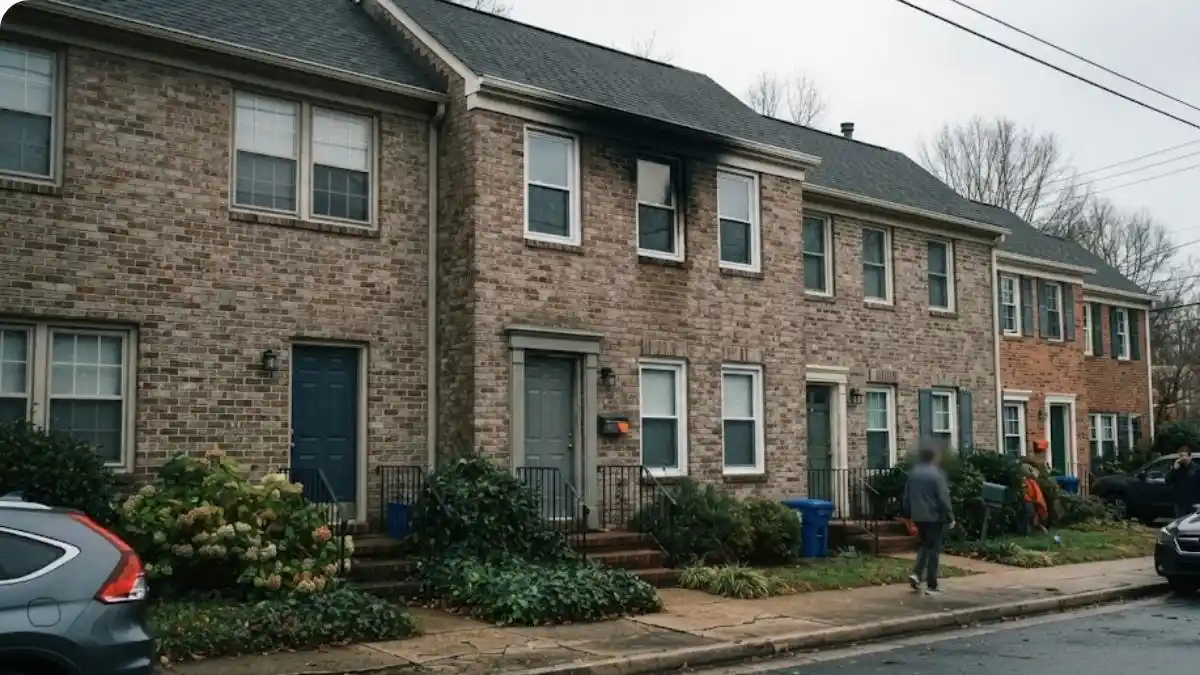
A fire in your attached home in Northern Virginia does not have to originate in your unit to cause you damage. This is one of the most disorienting aspects of living in the townhome and condo communities that make up a large fraction of Fairfax County, Kingstowne, Centreville, Farrcroft, and the Metro-adjacent neighborhoods of Falls Church and Vienna. Smoke travels. And when it travels into your home from your neighbor's fire, you have a real restoration problem regardless of whose unit it started in.
How Smoke Reaches Your Unit from a Neighboring Fire
Townhome and condo construction includes shared elements that are pathways for smoke infiltration: party wall cavities that run continuously between units, shared attic spaces that communicate across unit boundaries in many older designs, HVAC systems that share common chases or that serve adjacent units from the same air handler, and utility penetrations through fire walls that were sealed at construction but may have deteriorated over time.
Smoke from a kitchen fire in the adjacent unit finds these pathways within minutes. By the time the fire is out and you notice the smell in your home, soot may have deposited on your ceilings near shared walls, inside your closets adjacent to party walls, and inside your HVAC system if it shared any ductwork or chase with the affected unit.
What Documentation You Need
When smoke from a neighboring fire affects your unit, photograph everything before anything is moved or cleaned. Document the soot on walls and ceilings, particularly near shared walls and ceiling-wall junctions. Photograph any discoloration around HVAC registers. Open closets adjacent to shared walls and photograph conditions inside.
This documentation becomes the foundation of your claim regardless of which insurance path the damage ultimately takes. The at-fault unit's liability coverage, your own HO policy, or the HOA master policy may each be involved depending on the HOA structure and what elements were involved in the fire spread. Having documentation that establishes the damage in your unit as a real event — not something you are reporting speculatively — is essential for any of these claim paths.
Insurance Coordination in Multi-Unit Fires
Our insurance documentation service includes scope documentation for your unit that can be submitted to your carrier regardless of which coverage ultimately responds. We work with your adjuster to establish what damage existed in your unit at the time of our assessment, and we document our findings in the format that supports adjuster review. We do not advise on which coverage should respond; that is between your carrier, the neighboring unit's carrier, and the HOA as applicable.
What we do provide is clear, organized, photographed documentation of the damage in your space. This is the factual record that all parties need to resolve the claim correctly.
Cleaning Your Unit After a Neighbor's Fire
The smoke and soot cleanup process in your unit is the same regardless of where the fire originated. Smoke and soot residue on surfaces, in closets, and inside HVAC systems requires professional cleaning with chemistry matched to the residue type. If odor is embedded in your walls or flooring, thermal fogging or hydroxyl treatment is required to reach the embedded compounds that surface cleaning cannot address.
Your contents — clothing, furniture, electronics — that were in the smoke-affected areas may also carry soot and odor that requires professional cleaning. We inventory and document affected contents for your insurance claim and take items that can be cleaned to our facility for professional treatment.
What HOA-Governed Restoration Involves
HOA rules in Kingstowne, Centreville, Farrcroft, and other planned communities in Fairfax County govern certain aspects of restoration work: how party walls may be accessed, board-up requirements for windows and doors, access to common elements, and coordination with adjacent unit owners. We are familiar with HOA-governed restoration in Northern Virginia planned communities and coordinate with HOA management where the scope involves common elements or shared systems.
If your HOA requires specific documentation before permitting restoration work, we can provide scope summaries and work plans in whatever format the management office requires. Call (703) 397-8315 to discuss your specific situation.