Published 2025-07-22 · Fairfax Fire & Water Specialists
A chimney fire sounds dramatic, but in Fairfax County homes with older masonry chimneys, it often goes unnoticed until the damage is found during a subsequent inspection. The sound can be a low roar, a crackling, or nothing obvious at all if the fire burns in the flue without producing smoke visible from inside the home. The structural and fire damage risk it creates is real regardless of whether you knew it was happening.
How Chimney Fires Start
Creosote is the combustible byproduct of wood burning that accumulates inside the flue over time. Every fire deposits a layer; without regular professional cleaning, those layers build until the creosote itself becomes ignition material. When the temperature inside the flue gets high enough — from a particularly hot fire, from burning seasoned wood after a season of softwood, or from the simple accumulation of enough creosote over multiple seasons — the deposit ignites.
The resulting fire burns inside the flue at temperatures that can exceed 2,000 degrees Fahrenheit in severe cases. At these temperatures, clay flue tiles crack, mortar joints fail, and heat transfers through the chimney mass to adjacent wood framing in the attic and wall cavities. The fire may self-extinguish when it burns through the available creosote, leaving no visible sign of its occurrence other than cracked tiles and possible heat-darkened framing.
Why Older Fairfax County Chimneys Carry Higher Risk
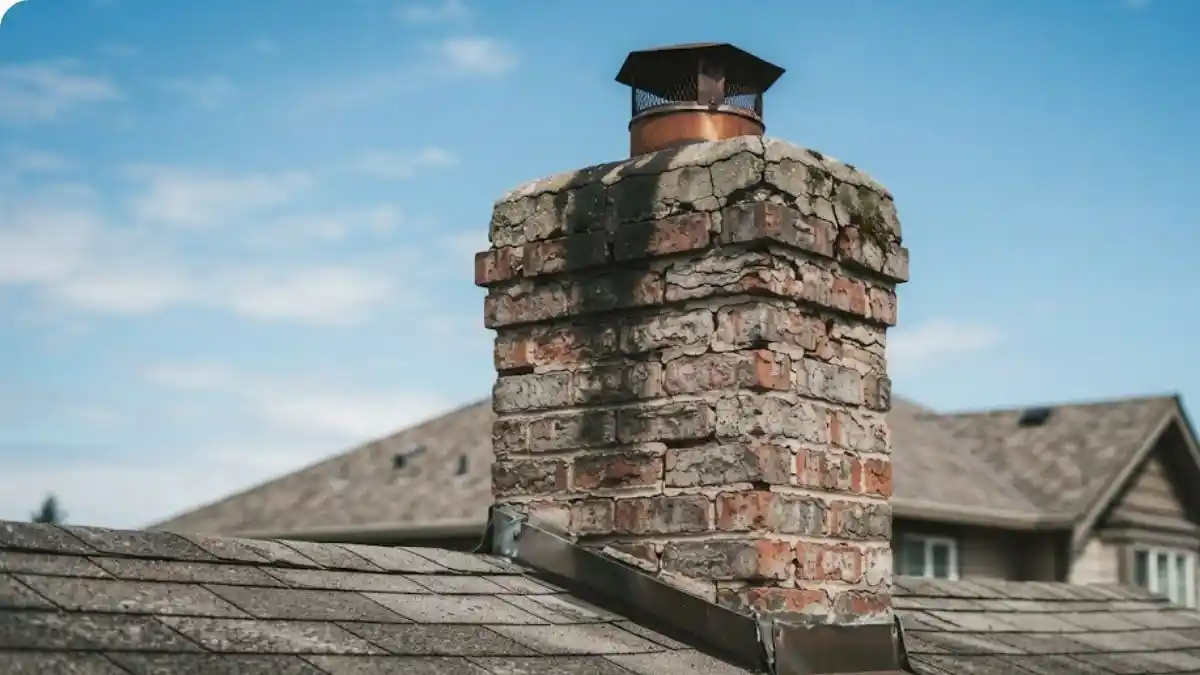
Homes in Vienna, Oakton, McLean, Old Lee Hills, North Springfield, and other older Fairfax County neighborhoods built in the 1950s through 1970s commonly have masonry chimneys with original clay flue tiles that have been through 50 to 70 heating seasons. Clay tiles expand and contract with each thermal cycle; over decades, this cycling causes hairline cracks that expand progressively. A chimney that appears intact externally may have flue tile cracks that compromise the fire separation between the flue gases and the surrounding structure.
Annual chimney inspection and cleaning by a CSIA-certified chimney sweep is the primary prevention tool. Many Fairfax County homeowners have not had their chimneys inspected in years; discovering that a chimney fire has already occurred during an inspection — evidenced by cracked tiles, white or gray calcified deposits on the tiles, and distorted metal components — is common.
What to Check After a Suspected Chimney Fire
If you noticed a roaring sound during a fire, smelled smoke more strongly than usual, heard cracking or popping from the chimney area, or saw smoke coming from the chimney chase rather than the chimney top, call the fire department. Fairfax County Fire and Rescue can perform an initial assessment and determine whether the fire is fully extinguished before you re-enter or use the fireplace again.
After fire department clearance, a certified chimney inspector should assess the flue liner, chimney masonry, and surrounding framing in the attic for heat damage. Our fire damage restoration team can assess the interior structural impact — particularly in attic framing adjacent to the chimney and in ceiling and wall areas below the chimney run — and document findings for your insurance carrier.
Structural Heat Damage from Chimney Fires
Heat transfer from a chimney fire to adjacent framing can occur through direct contact with cracked tile or through radiant heat from an overheated chimney mass. The wood framing in contact with or adjacent to the chimney in the attic space is the area of greatest risk. In some chimney fire events, framing is found with char marks or heat-dried, darkened surfaces that indicate heat exposure significant enough to reduce structural integrity.
The attic inspection after a chimney fire is not optional. A homeowner who does not inspect the attic and uses the fireplace again after a chimney fire that cracked the flue liner has created conditions for a second, potentially more dangerous event. Our emergency board-up service secures the chimney opening during the assessment period if needed.
Insurance and Chimney Fire Documentation
Chimney fire damage is generally a covered peril under standard HO-3 fire coverage. The documentation that supports the claim includes the fire department response record, the chimney inspection report, and our interior structural assessment. We photograph the attic framing, any ceiling or wall areas with heat or smoke damage, and document moisture readings for any firefighting water used in suppression.
For chimney fire assessment and fire damage restoration in Fairfax County, call (703) 397-8315. We work alongside the chimney contractor's timeline so both the structural assessment and the chimney repair can proceed concurrently.